


I read an Instagram post the other day about the state of our world that said…”This is no longer about our political beliefs. It’s about our ethical beliefs.” And for followers of Christ it is even more than that. It is about what we claim to believe, who we follow, and why it matters.
To be sure…talking about national or international tensions right now is not an easy topic to discuss. For some of you, this will feel confrontational. For others, it will feel affirming. But I want to suggest to you that wrestling with the teachings of our Biblical texts should feel neither confrontational (as in…they are pointing the finger at me) or affirming (as in…I’m the good kind of Christian).
Instead, these teachings should be our unifier. Our mutual testament to striving to live a life of Christian beliefs even when we find it hard, uncomfortable or against some of our core values.
As many of you know, our lectionary (the appointed texts we read every Sunday) is built upon a common theme each week. The theme this week is stated in Micah with one question… what does the Lord require of you but to do justice, and to love kindness, and to walk humbly with your God?
Do Justice.
Love Kindness.
Walk Humbly with God.
That’s our primary teaching to consider.
And as much as we will want to disregard these commands as partisan, let’s remember that these words were written between 750 and 700 BCE. That’s 700 years before the birth of Christ. Old, ancient words that tell us one thing…we humans have always struggled with what it means to be loving, kind and just to one another. And our current social and political climate is no exception.
After the reading from the prophet Micah, the lectionary gives us two important building blocks to help us understand the depth of what Micah proclaims.
Building Block #1: In Jesus’ first public sermon he addresses what justice and kindness and humility look like in our lived experience.
Blessed are the poor in spirit.
Blessed are those who mourn.
Blessed are the meek.
Blessed are those who hunger and thirst for righteousness.
Blessed are the merciful.
Blessed are the pure in heart.
Blessed are the peacemakers.Blessed are those who are persecuted for righteousness’ sake.
Building Block #2: Paul expands this teaching in 1 Corinthians.
For God’s foolishness is wiser than human wisdom, and God’s weakness is stronger than human strength….But God chose what is foolish in the world to shame the wise; God chose what is weak in the world to shame the strong; God chose what is low and despised in the world, things that are not, to reduce to nothing things that are, so that no one might boast in the presence of God.
These two building blocks describe what actions we should be striving towards and the obstacles we will need to overcome to fully embody these actions.
Blessedness only grows out of love and dignity and respect for every human being. Without barriers. Without conditions. Without national or political ideologies.
Because God’s wisdom is different.
And this kind of wisdom will feel radical and countercultural in the times we are living in. Paul knew that to be the case when he wrote to the church in Corinth and we know it to be the case today.
And yet we resist that call to blessedness.
And that resistance is heartbreaking. At least it should be. It should be heartbreaking enough that we all want to do something about it.
When Jesus called his first disciples in Matthew Chapter 4, he was calling them to a new allegiance. To new commitments. To a new identity. And they had to choose which path to follow. And as much as we like to romanticize their choice, it was anything but. It was a costly choice that reoriented everything they knew and put them in direct opposition to the Roman Empire. And we know how dangerous that choice would become.
Because with Jesus they were being called to embody justice, kindness and humility. To stand up for the people who were hurting (the poor, the grief-stricken, the meek, the hungry) and to work to create a better reality.
Jesus is specific in what that work looks like in our text from Matthew…to be merciful, to be pure in heart, to be a peacemaker, to be willing to stand firm when the powerful threaten you.
But like the people in Corinth…we have become boastful, circling the wagons of our respective camps, willing to justify any behavior that comes from our “side” in order to claim righteousness.
But at what cost? And for whom are we claiming that righteousness?
As John van de Laar states in his weekly lectionary essay:
“We cannot believe in Jesus and then use power to harm and exclude others. We cannot follow Jesus’ way and live by the divisive, self-interested, status-worshipping “wisdom” of our society….we have the world we have because we think and act the way we do. Our human wisdom has created an unsustainable world in which we are unable to find solutions for the great problems we face. Our human power has only led us into a divided, unequal, and violent world where peace and freedom are promised but never realised. Paul’s conviction, then, is that the wisdom and power of the cross are the only ways to a world and life that is abundant, sustainable, and just for all. And in the light of the cross, the world’s wisdom and power are exposed as foolish and weak.”[1]
Our strength as Christians following the call of Christ is in how we love and serve one another. And when we grasp that teaching, everything must change.
Around 400 CE Augustine wrote in his Confessions:
“What does love look like? It has the hands to help others. It has the feet to hasten to the poor and needy. It has eyes to see misery and want. It has the ears to hear the sighs and sorrows of men. That is what love looks like.”[2]
Remember…this is a struggle we as humans have had for thousands of years. Our current time is no different but this is our time. And we have the opportunity to enter the struggle and commit to change…together.
And so let me offer you some tools to move forward, because I know this is challenging, vulnerable work. Work that you may not think is yours to do. Work that you may feel is overwhelming. But it’s work we all need to enter into together.
So the first suggestion is this…it’s from a beautiful editorial by Esau McCaulley, associate professor of New Testament and public theology at Wheaton College.
He says that in divided times (whether they be personal within families or communal within larger societies) it’s all too easy for us to define ourselves based upon that which we hate. We become angry and find… “fellowship among other infuriated citizens….a community that has formed not by hope but by loathing.” And when that happens it’s very difficult to open doors of reconciliation. But, he suggests, it’s within all of our abilities to set aside that kind of reactive identity and allow ourselves to be defined by hope and forgiveness for each other…no matter how deep the hurt or the fear or the division may have become.[3]
Living into a hopeful identity…not a reactive identity.
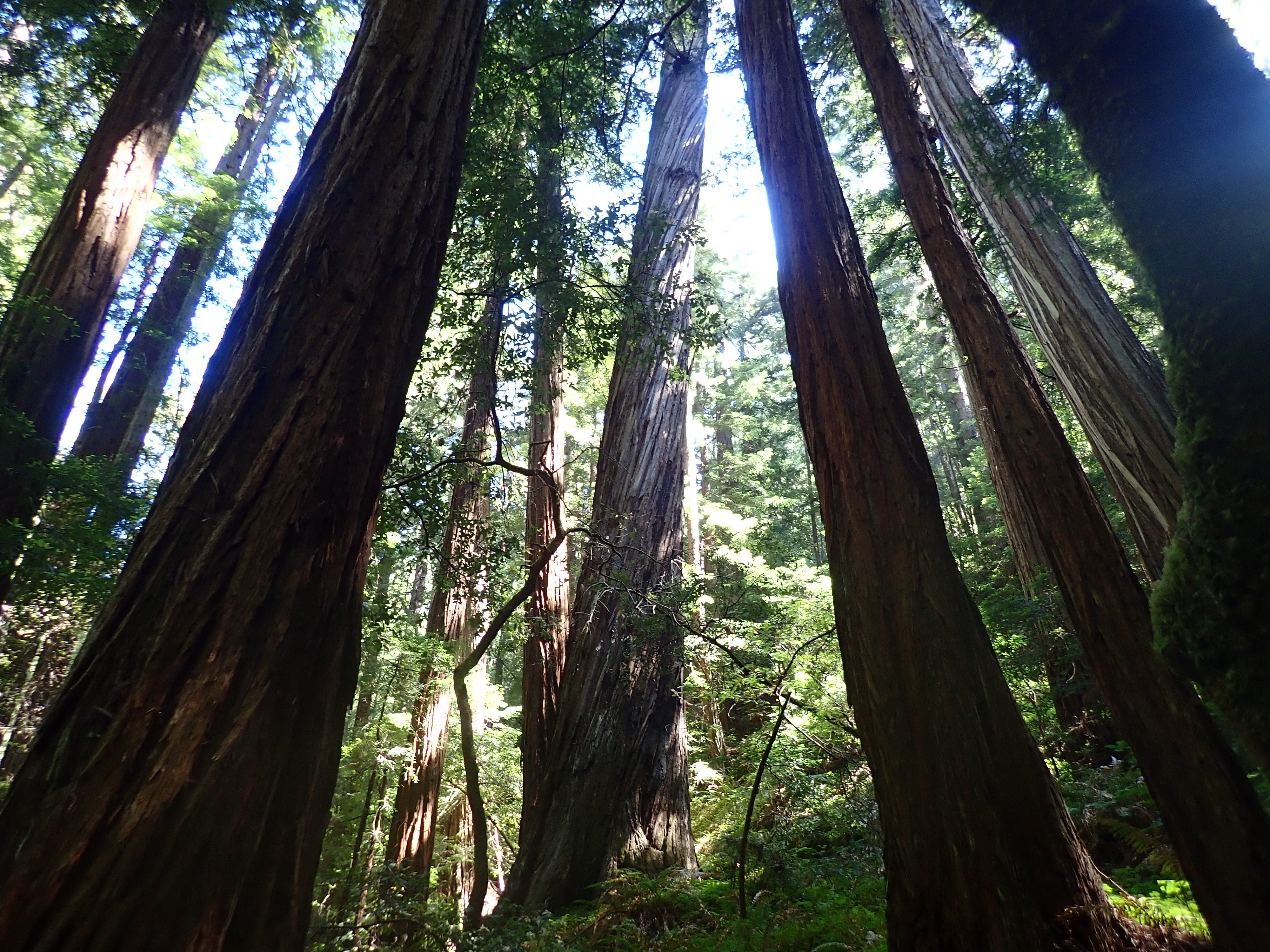
The second suggestion is possibly one of the most beautiful perspectives I have ever heard. It was written by Amy Hoppock in her blog Smaller and Deeper. She suggests the image of the Redwood Tree. The redwoods have been around for over 240 million years and despite their towering size they have extremely shallow root systems. They can grow to over 350 feet tall but stand firm against the harshest wind and weather. Why? Because their root system is intricately intertwined. Each tree shares part of the burden, holding each other up, supporting each other, building a joint foundation of interdependence.
As Amy states,
“These intertwined roots create safety, strength, flexibility, and grace for the entire forest. I want to live in a society like the redwoods. Where larger trees reach out and enfold new growth, where strong wind is braced by holding onto each other. Where rigidity has no place, and swaying together is the measure of success.”[4]
Our interdependence is our safety and our strength.
And let me add…it is in recognizing one another’s blessedness that we may find our pathway forward.
A Black Rock Prayer Book, written by the Rev. Brian Baker.
The world now is too dangerous
and too beautiful for anything but love.
May your eyes be so blessed you see God in everyone.
Your ears, so you hear the cry of the poor.
May your hands be so blessed
that everything you touch is a sacrament.
Your lips, so you speak nothing but the truth with love.
May your feet be so blessed you run
to those who need you.
And may your heart be so opened,
so set on fire, that your love,
your love, changes everything.
***************Enjoy a moment of peace from the John Muir Woods.*****************
[1]

[2] Augustine of Hippo, attributed, “What does love look like? It has the hands to help others…,” quoted in various secondary sources.
[3] https://www.nytimes.com/2026/01/25/opinion/ice-rage-identity.html
[4]
