


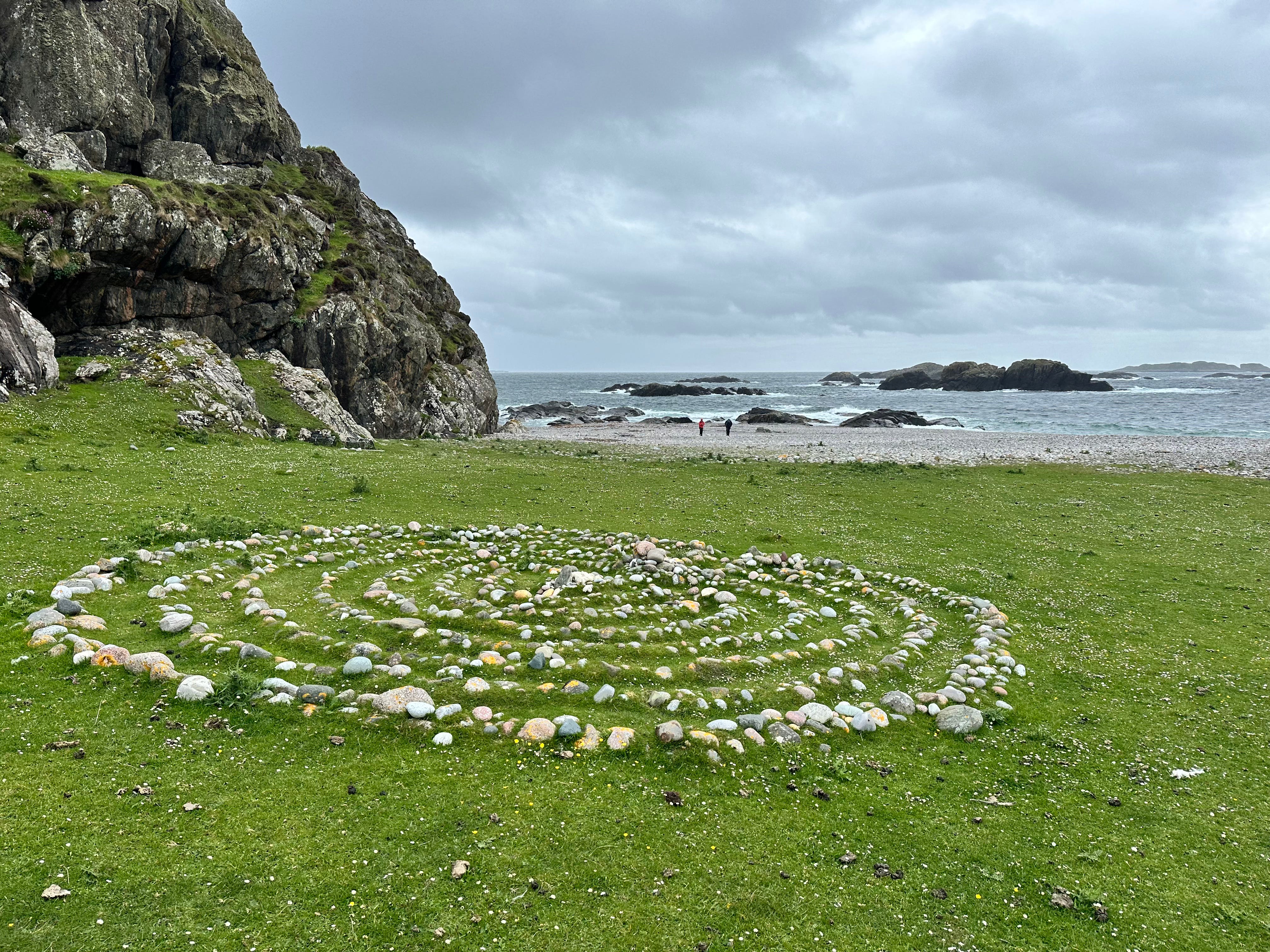
Christ beside me, Christ before me;
Christ behind me, Christ within me;
Christ beneath me, Christ above me;
Christ to the right of me, Christ to the left of me…[1]
Since I was 8 years old, this prayer has been an ever-present reality for me. But it wasn’t a prayer I understood in spoken words back then. In fact, if you asked me to tell you what these words meant, I would have answered not in definitions but in feelings.
Because what I understood about God was something so much deeper than words could convey. It was a lived experience of presence. God’s presence. In and around me. Above and below me. God just was.
And it started with an altar call.
If you aren’t familiar with what an altar call is, let me give you a brief explanation. Some Christian denominations believe that the altar call is your opportunity to turn your life over to Jesus, to make a public profession of faith. During the last hymn of the worship service the pastor stands at the front of the church, bible in hand and waits. Waits for anyone who would make the decision to “accept Jesus as their Lord and Savior.” It is the moment your sins are washed away.
Cue the scene from O Brother, Where Art Thou…
I felt the same joy as Delmar but without the robbery of Piggly Wiggly to confess. But my joy was the same and it was profound.
The joy of God in thy face,
Joy to all who see thee,
The circle of God around thy neck,
Angels of God shielding thee,
Angels of God shielding thee,
Joy of night and day by thine,
Joy of sun and moon be thine,
Joy of men and women be thine,
Each land and sea thou goest,
Each land and sea thou goest.[2]
And here’s what else…I can’t tell you how I made it from the pew to the front of the church. I don’t remember walking. What I do remember was being carried. Carried down the aisle of Second Baptist Church in Belton, South Carolina. Carried by a God who loved me beyond anything I had ever felt before. In that moment I knew something that was beyond words. And from that day forward, I never ever felt separate from God.
I am not Baptist anymore. I am an Episcopal priest, and my theology has changed over the years. The theology of the altar call doesn’t ring true for how I understand the presence of God or how I understand things like salvation and redemption and forgiveness.
However, what does ring true is what I felt on that day when I walked down the aisle. God was all around me.
I have described it to people as the sense that God has always been with me or that God has never left me. I have described it as a deep peace I have often felt in moments of uncertainty. I can also tell you that I wouldn’t have made it through some very dark times if it wasn’t for this ever-present reality of God.
But those descriptions are still just words. Insufficient explanations of a divine truth that will be forever beyond my meager human understanding. And I am always aware of the limitations of those words, of the futility of trying to explain how God feels.
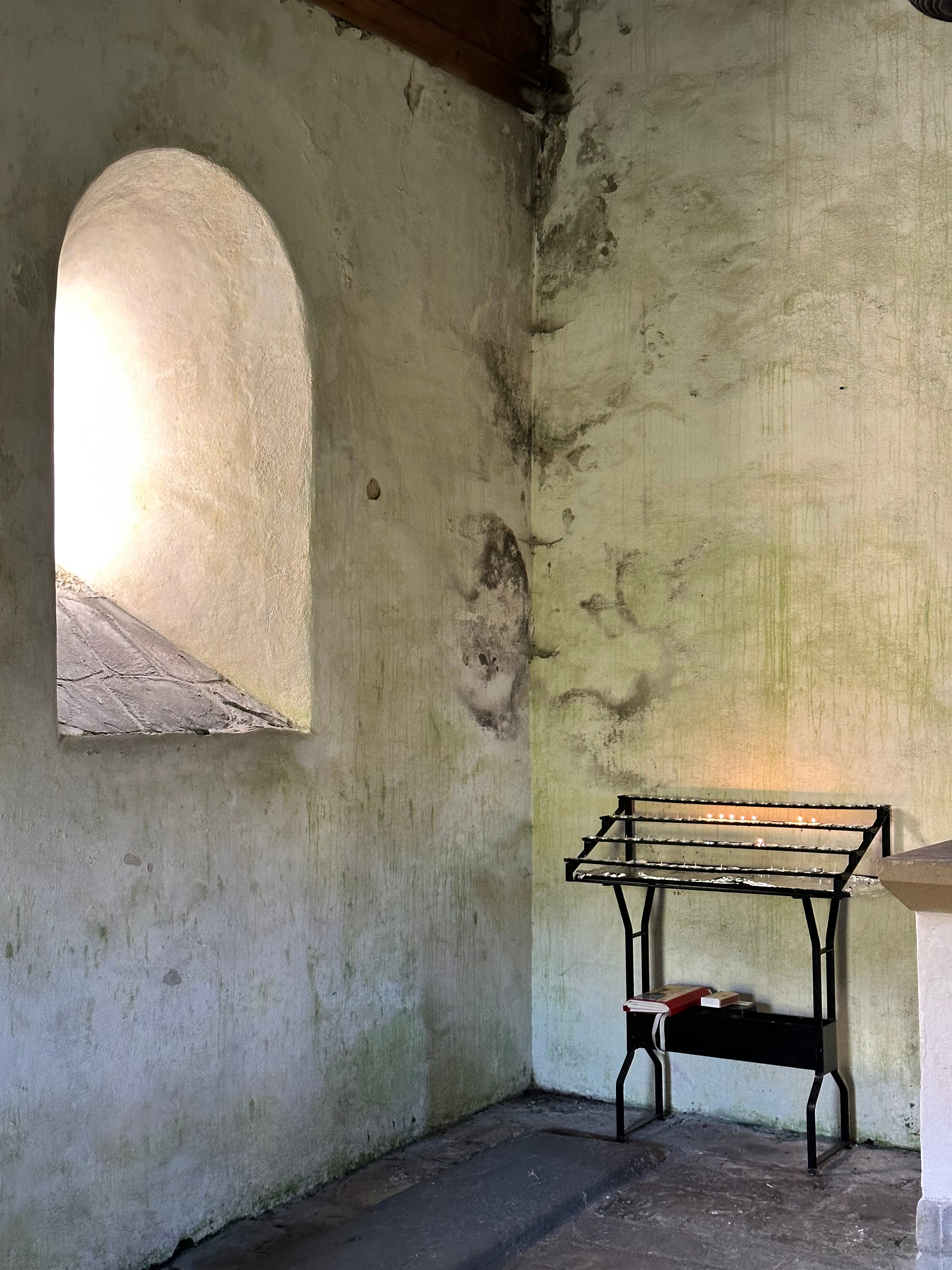
It took almost 30 more years to understand those feelings within a clearer context. That’s the day I attended a Celtic service at St. Stephen’s Episcopal Church, in Richmond, Virginia. Those feelings of God’s closeness started to settle in my soul in a more tangible way. Feelings swirled with words and words became an embodied experience. I knelt to pray for the first time ever. I ate the bread and I drank the wine. I sat in silence amongst candlelight as a healing prayer minister placed her hands on my shoulders and told me I was loved. I cried. I let every word and feeling wash over me in this deep memory of God in and around me. Above and below me.
This was home. This was who I knew God to be.
It was a tangible knowing that stretched back through history for generations upon generations. To the earth and to the heavens. To the seas and to the sky. And God held me.
Looking back over the years, there were moments that could have shattered me. Abuse. Estrangement. Divorce. Financial instability. Single parenting. But I can look back and feel the all-encompassing presence of God carrying me just the way God carried me that day at Second Baptist Church. And even though my words are insufficient, I can feel it. And I know with my entire being that my life is held so tightly by this God who loves me.
This day I call to me;
God’s strength to direct me,
God’s power to sustain me.
God’s wisdom to guide me,
God’s vision to light me,
God’s ear to my hearing,
God’s word to my speaking,
God’s hand to uphold me,
God’s pathway before me,
God’s shield to protect me…[3]
And so I go back to these words from the Celtic tradition and I can hear my feelings of God translated onto the page. Affirmed by generations who have also understood that feeling. Written by faithful followers who were able to express the inexpressible.
What I know now is that the Celtic tradition has been a life-giving home for me for many years. But it wasn’t until my trip to Iona this summer that I understood how life-giving this spiritual tradition has actually become. Iona (an island off of the western coast of Scotland) is by many accounts, the heart of early Celtic Christianity…a thin place steeped in ancient rhythms of prayer and nature, where the indwelling of God is part of all that is.
The Celtic saints and mystics from this place explained exactly how I began my journey with God at age 8. They described a God I knew so well through words I never had. This was the assurance that what I felt back then was grounded in something so much deeper than any one denomination or church or teacher could provide.
It was an experience of God that was elemental to humanity. Before Christianity became the instrument of institutions. Before it was used to solidify power and dominance. Before it was a defining factor of who deserved dignity and personhood. Before it was used to justify hierarchies and hegemony.
I often imagine these early Celtic followers of Christ simply wanting to learn about this person whom they had heard about. This person who was so radical that he terrified emperors and upset political and social structures. This person who knew no boundaries of love and inclusion and justice. This person who taught about mercy and forgiveness and grace.
And as they came to know the fullness of the love of God, they started to put their experience into words…
The guarding of the God of life be on you,
The guarding of loving Christ be on you,
The guarding of Holy Spirit be on you
Every night of your lives,
To aid you and enfold you
Each day and night of your lives.[4]
For these early Celts, life wasn’t immune to suffering and pain. Their faith wasn’t about escaping hardship for some utopia eternity. But I think it is fair to say that their experience of darkness was always balanced by the gift of light. Joy kept winning out, over and over again. And that joy wasn’t the absence of hardship. It was the assurance that God was above and below them, beside and behind them. It was the promise that God was walking with them straight through what was broken into the promise of what was to be healed.
And that joy and that healing wasn’t relegated to one group over another. This was faith before it became divided by theological differences and cultural norms. I might even be so bold as to say that it was faith that was as genuine as faith could get.
It is that genuineness that calls me to go ever deeper into the Celtic tradition of Christianity. To seek out what it would look like if we began to truly see God above and below, beside and behind all of humanity.
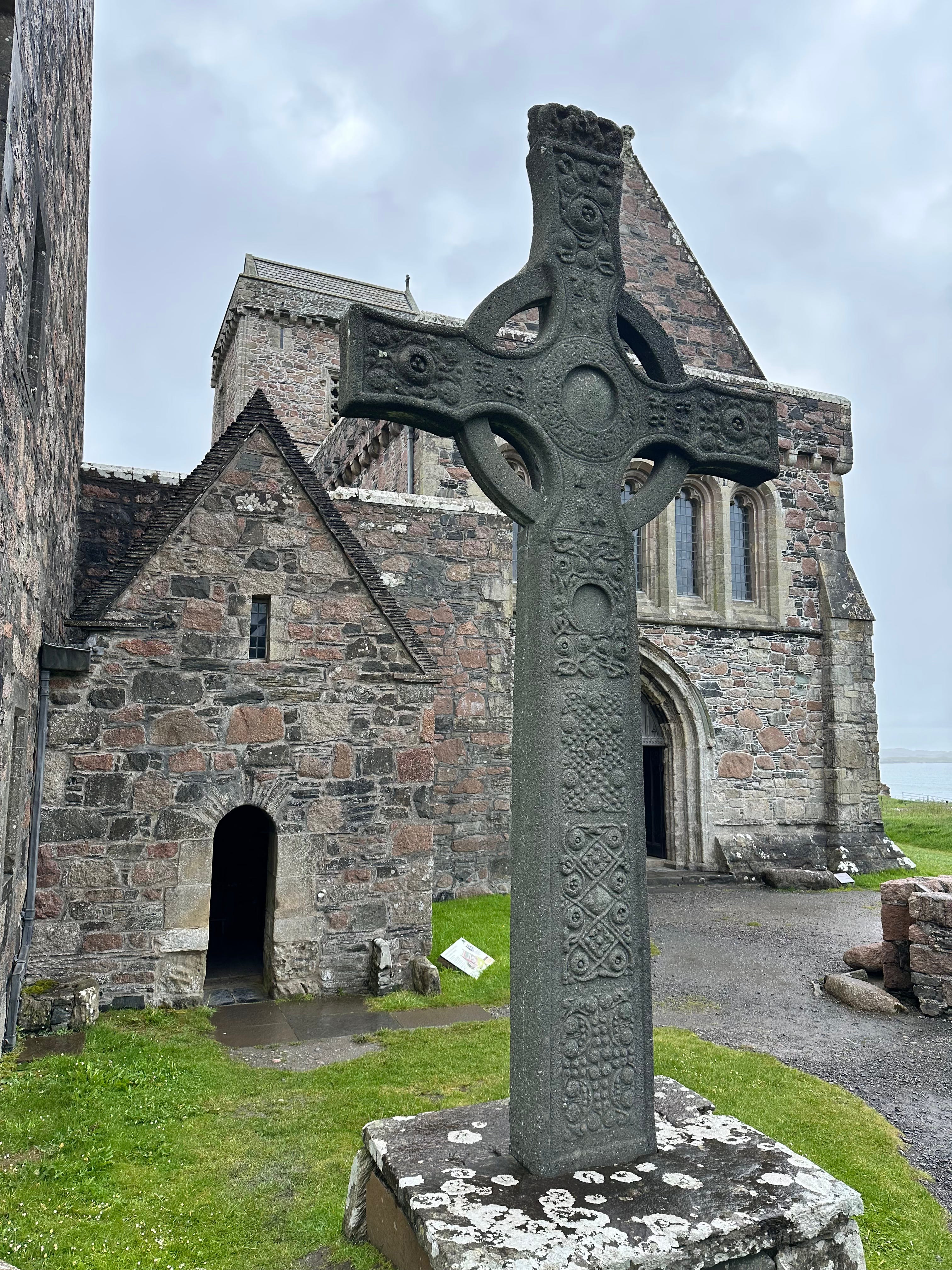
Because if we truly knew God in this way…in our feelings and in our words and in our actions…could we transcend the divisions we are facing in our society right now? Could this all encompassing God enliven our hearts enough to set aside our human constructs of religious hierarchies and political platitudes?
If we believed that God’s love is pouring out onto this whole world, onto all people, how could we not begin to see worth in those we once defined as worthless? How could we not see goodness in those we once feared or disregarded or hated?
Could we see beyond our corners of denominational or political or cultural righteousness?
When I left Iona, I left with a sense of hope. A hope that the anger and division of this world can be replaced by genuine unconditional care for creation…all of creation.
However, that is a kind of hope that our politicians and media outlets don’t want us to grasp. A kind of hope that many religious institutions want to tell you is only possible with a particular confession of faith. A certain kind of hope that is defined by the grasp for power and privilege for those deemed good enough to receive a very specific, exclusive, alienating definition of the love of God.
But that’s not hope. It will never be hope.
So maybe it’s time we reclaimed what hope is all about. The kind of hope that can be reclaimed by the belief in the oneness of God and in the sacredness of one another.
For me, this is the continuation of the journey I began at 8 years old. That church aisle has turned into a much longer path than I ever imagined. And I am grateful.
I hope you will join me.
I’m creating a breakout space on my Substack page called Celtic Pathways. It’s an exploration of these ancient teachings brought to life in our current context as faithful people believing in an all-loving God. No boundaries. No walls. No exclusions.
Let’s journey together.
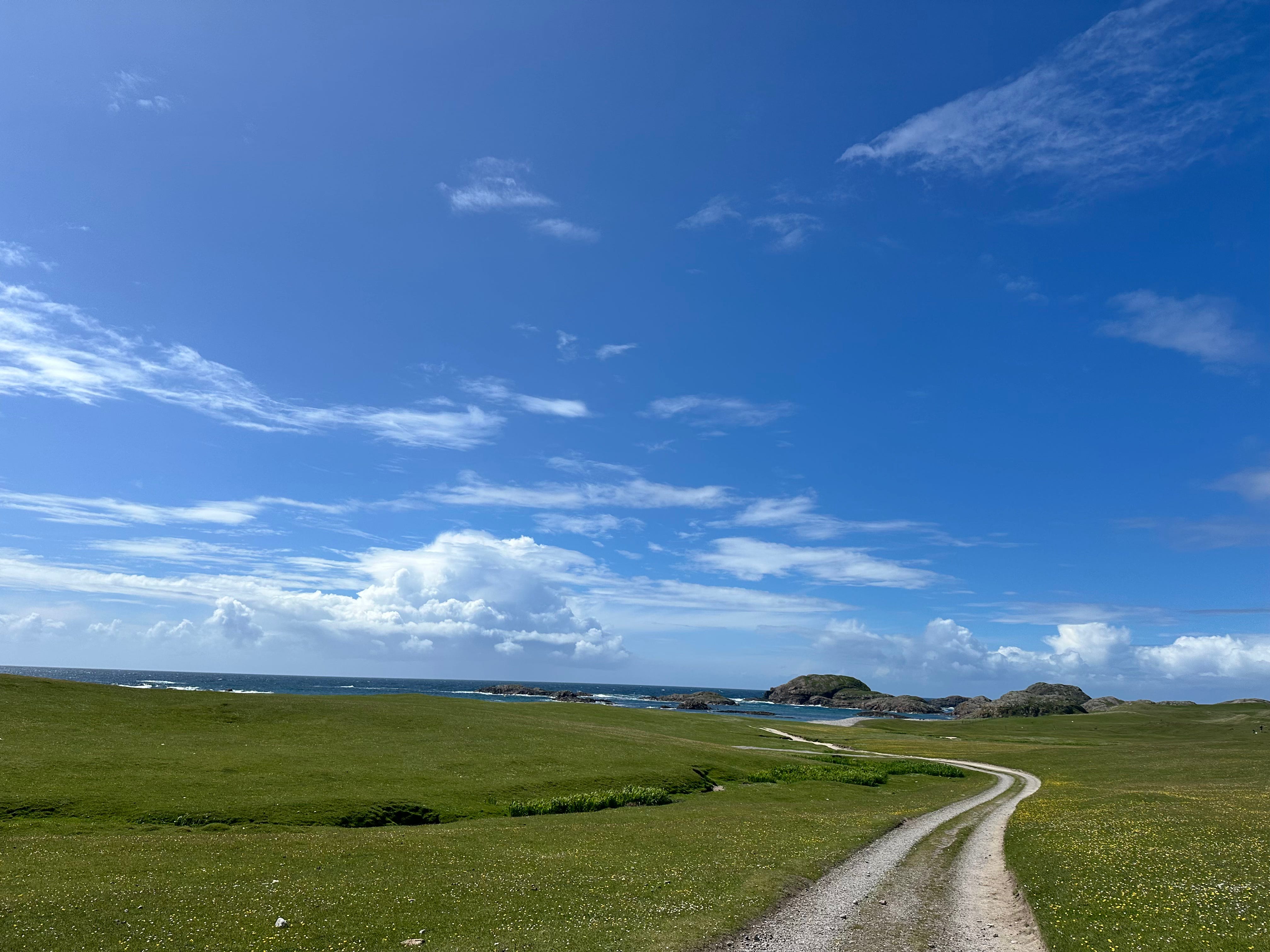
God be with thee in every pass,
Jesus be with thee on every hill,
Spirit be with thee on every stream,
Headland and ridge and lawn;
Each sea and land, each moor and meadow,
Each lying down, each rising up,
In the trough of the waves, on the crest of the billows,
Each step of the journey thou goest.[5]
[1] Mackey, James P., ed. An Introduction to Celtic Christianity. Edinburgh: T&T Clark, 1989. p. 48.
[2] De Waal, Esther. The Celtic Way of Prayer: The Recovery of the Religious Imagination. New York: Doubleday, 1997. p. 14. Prayer selection from the Carmina Gadelica, III.
[3] Mackey, James P., ed. An Introduction to Celtic Christianity. Edinburgh: T&T Clark, 1989. p. 47.
[4] Carmichael, Alexander, ed. and trans. Carmina Gadelica: Hymns and Incantations. Edinburgh: Floris Books, 1992. p. 255.
[5] De Waal, Esther. The Celtic Way of Prayer: The Recovery of the Religious Imagination. New York: Doubleday, 1997. p. 11. Prayer selection from the Carmina Gadelica, III.