


[Jesus said to his disciples,] 36“About that day and hour no one knows, neither the angels of heaven, nor the Son, but only the Father. 37For as the days of Noah were, so will be the coming of the Son of Man. 38For as in those days before the flood they were eating and drinking, marrying and giving in marriage, until the day Noah entered the ark, 39and they knew nothing until the flood came and swept them all away, so too will be the coming of the Son of Man. 40Then two will be in the field; one will be taken and one will be left. 41Two women will be grinding meal together; one will be taken and one will be left. 42Keep awake therefore, for you do not know on what day your Lord is coming. 43But understand this: if the owner of the house had known in what part of the night the thief was coming, he would have stayed awake and would not have let his house be broken into. 44Therefore you also must be ready, for the Son of Man is coming at an unexpected hour.”
Matthew 24:36-44
There is something odd about beginning our Advent season with a text that is anything other than hopeful. Today’s Gospel is no exception. It raises a lot of questions for me…especially why would our lectionary begin our season of joy and anticipation with fear and frustration? It certainly doesn’t give us the most welcoming of invitations.
When I was growing up these types of dreadful, end times texts were all the rage. My grandmother, whom I adored, was what you might call a biblical literalist. She knew about the end times. She took the book of Revelation as the actual, detailed roadmap to Judgement Day and it was up to you to live right or end up on the wrong side of eternity.
And my grandmother longed for Christ to come again…through the clouds in a miraculous ray of light to take the good Christians up to heaven.
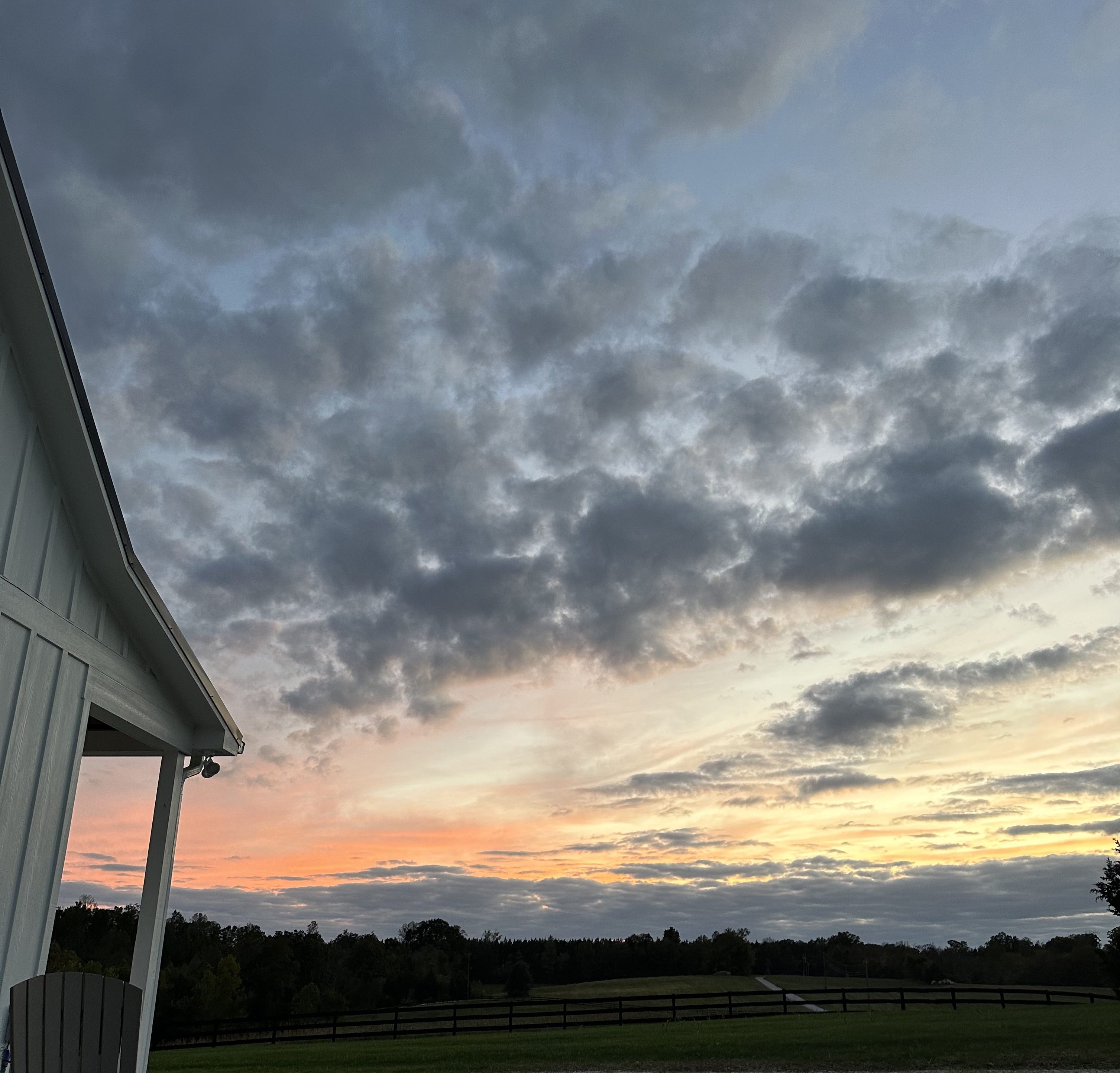
But, as a little girl…I had a different reaction. I remember sitting outside looking up at the clouds saying, “Not yet, Jesus! Not yet!”
I remember crying because I wanted to grow up and have a family and if Jesus came too soon, I wouldn’t get to experience any of that. I mean…did people get married in heaven? Did they have children? Grandma never said anything about those things. I just thought it was so sad for all of us kids who would never get to be real adults.
And if Jesus wanted us to be ready, well…I was going to do my darndest to drag my feet a little.
Not surprisingly, I ended up not being a biblical literalist. For me, stories of the end times were simply someone’s best speculation about what the redemption of this world might look like. They gave a tangible way to comprehend the incomprehensible power of God. And they told us something about someone’s version of salvation, not as a concept but as a reality. A reality that we needed to prepare for OR ELSE.
It’s just that this kind of literal reality didn’t seem very loving…at least not to me. I wrestled back then and I still wrestle today with the idea that God would leave anyone behind or leave anyone on the wrong side of eternity.
I was taught to sing Jesus Loves Me not Jesus Loves a Select Few of Religious Over Achievers.
So, when it comes to our text today, there must be more to the story.
What if the text from Matthew has nothing to do with some final salvation in heaven but has everything to do with salvation here on earth? What if what we are preparing for isn’t the opening of heaven’s gates but is the opening of our own hearts?
Let’s look a little closer.
The Gospel writer is writing around 80 CE. Jesus’ birth has happened. So has his death and resurrection. At this point in time people have been waiting for Jesus to return for about 50 years. They believed his second coming to be imminent. They were expecting deliverance. But the deliverance they had hoped for wasn’t happening, at least not in their timeframe. So Matthew tries to reorient their expectations and encourages them to do something more constructive than just looking up at the clouds waiting for some external force to fix what was broken. Matthew wants them to be proactive in salvation…to put into practice what Jesus had already taught them.
In other words, stop waiting and start working.
Because waiting can too easily grow into complacency. And before long our sense of expectation diminishes into lackluster self-preservation. We drag our feet and hope things get better once Jesus makes them better.
Come on, Jesus…when you are coming through those clouds?
Matthew is turning that complacency on its head and is showing us a different kind of salvation. A salvation that is more embodied, more transformational, more loving than anything we could ever imagine. And above all, Matthew is showing us a salvation that is participatory.
I want you to notice something important in this reading. Matthew compares the second coming of Christ to the flood. This is fascinating. Because we know that Noah didn’t ascend into heaven out of harms way to some state of heavenly bliss when those flood waters rose. He had to ride out the storm and then he was left on this earth to rebuild all that had been destroyed. It was his calling to build something better. Something that was deeply committed to God’s vision for a more loving world.
For Matthew this is the lesson of these apocalyptic texts. To take the joy of the beginning with the anticipation of the ending and living as Christ taught us to live as we occupy the in between.
And, our in between living calls us to a greater responsibility, a bigger purpose, a deeper love for one another. We are here to do God’s work now. Not waiting for some final escape but building a more meaningful and compassionate world each and every day we are blessed to be on this earth.
Romans says it so well…we are to awaken to our purpose, to allow Christ to indwell us and move us toward a greater calling as Christians in this world. We put on the armor of light in order to bring that same light to others…to bring hope, to bring joy, to bring salvation when we see brokenness.
If we were able to read a little farther in Matthew, we would find that the very next chapter, chapter 25, explains what living in the here and now is all about. It tells us we are to feed the hungry, give water to the thirsty, welcome the stranger, clothe the naked, care for the sick, visit the imprisoned.
This is our wake up call. And we have work to do.
As John van de Laar wrote this week in a beautiful post linked below:
“Waking up, for the believers, was realising the truth that was revealed in Christ—that all of creation was permeated with God’s presence and life, that everyone and everything is an incarnation of God.5 If there was any waiting to be done, it was…for Christians to recognise the sacredness in all things and to embody the love, grace, justice, and healing of Christ.”[1]
And, Chapter 25 will soon remind us of Jesus’ familiar charge…”Truly I tell you, just as you did it to one of the least of these…you also did it to me.”
We are the embodiment of Christ. We are love incarnate. And it is this love, brought into the world and into our hearts that we claim each Advent season.
This is what we wait for.
[1]

Emily,
This is stunning, and so very timely around my own contemplations.