



This is the first of a 7 part series exploring Celtic theology through the creation story. Let’s begin our journey into the heart of Celtic Christianity…
In the beginning God created the heaven and the earth. And the earth was without form, and void; and darkness was upon the face of the deep. And the Spirit of God moved upon the face of the waters. And God said, Let there be light: and there was light. And God saw the light, that it was good: and God divided the light from the darkness. And God called the light Day, and the darkness he called Night. And the evening and the morning were the first day.
Genesis, Chapter 1:1-5 (KJV)
In Celtic theology there is a concept that weaves its way through ones understanding of God. It’s the understanding that God is all around us, above and below us. But it’s not just that God is all around us. It is also the belief that God is within us…a divine presence that has brought creation into being. Creation - not as separate from God but intimately woven into the very essence of God.
In the beginning God created.
When I think of that initial moment of God breathing imagination into the formlessness of what Genesis calls “the deep”, I think of a mighty yet loving breath. Giving part of God’s essence over to this new endeavor as God moved over the face of the waters. Each particle a spark of Spirit.
And there was light. And there was dark. And it was good.
And there was God… all around, above and below…and within.
The first chapter of Genesis is a proper place to start if we are to understand the heart of early Celtic Christianity. In the first centuries after Jesus’ life and death…I like to imagine a time before there were questions. Before there were doubts about the meaning and purpose of religion.
I imagine a time when there was simply wonder and awe. A time when there was a longing to be near this beautiful divine presence who had walked this earth. Who showed people what was possible with God’s divine spark within them.
The early Celts understood wonder and awe especially when it came to how they understood the world. And for them, God was not a theory or something to be debated. God was concretely intertwined with how they understood existence. And so their everyday lives became a practice of witnessing the presence of God in all that they did. The divine spark came alive.
Written in the early 5th century (as tradition suggests), St. Patrick’s Breastplate names this living spark:
I arise today
Through strength of heaven
Light of sun,
Radiance of moon,
Splendor of fire,
Speed of lightening,
Swiftness of wind,
Depth of sea,
Stability of earth,
Firmness of rock.[1]
Maybe this is how the early Celts would have described the great deep of Creation. Radiance and Splendor. Speed and Swiftness. Depth and Stability. Firmness.
Because the great deep on that first day wasn’t without divine presence. It was full of divinity. A presence that was in the midst of creating. Dreaming. Planning. Building.
The closest I have ever come to understanding this moment of creative anticipation was on a dive trip off the Cayman Islands at Bloody Bay Wall (an ominous name for sure). Bloody Bay Wall drops down to over 3,000 feet into the unknown depths of the earth.
Being there with an almost endless expanse below me was one of the most profound moments of my life. Our dive master had instructed us to move away from the wall….about 50 feet…so that you could hang at zero buoyancy in the middle of the expanse. That’s when I turned around so that the wall was behind me. And I gazed upon the deep. I floated in silence.
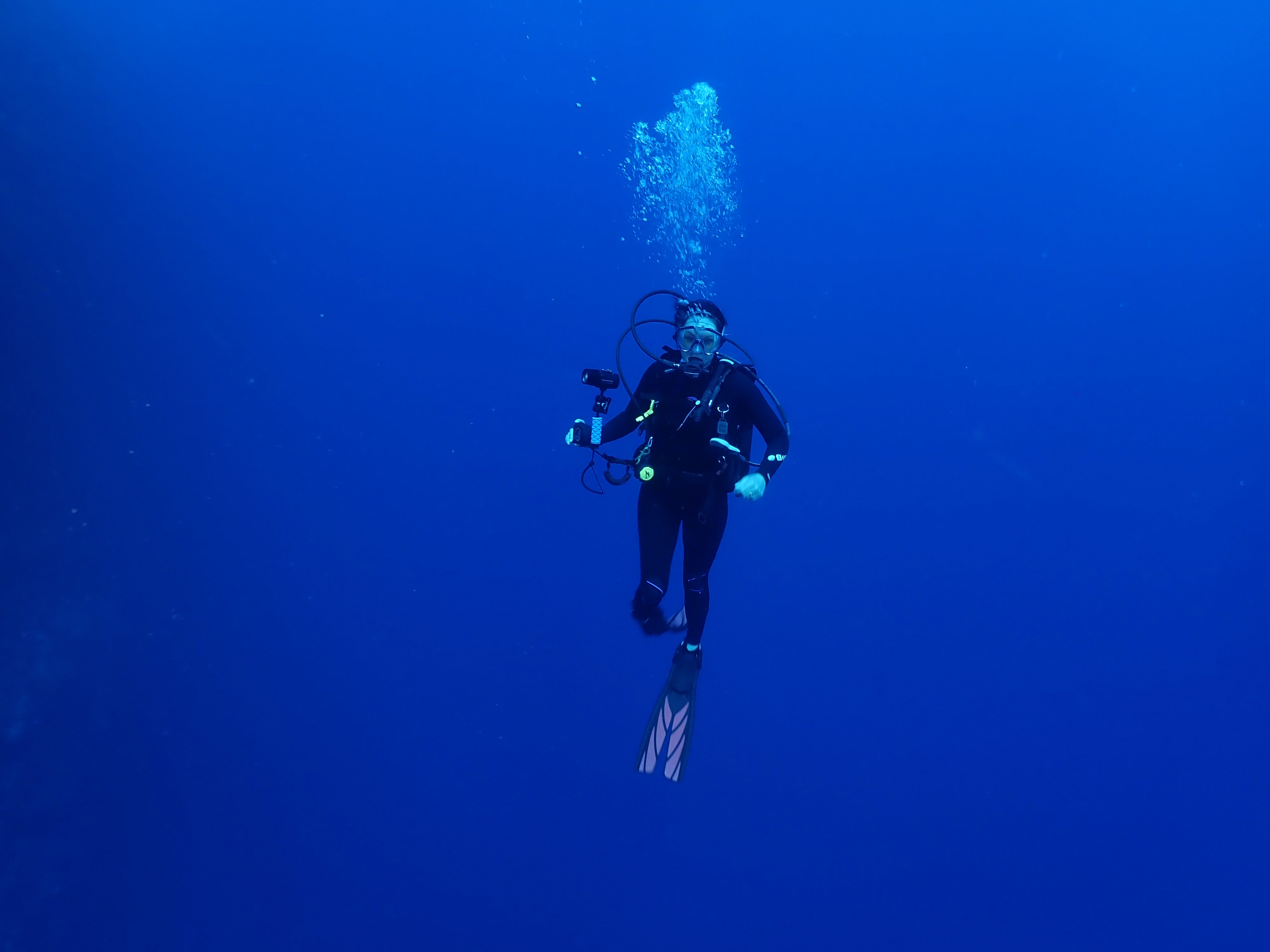
The depth felt like an impossibility. It was hard to comprehend. At any moment you wondered if it would engulf you, pulling you down into the darkness beneath you, swallowing you whole.
But it didn’t. It held me right there in place. In the deep. And what I felt was peace. God’s peace all around. Above and below. Within. I could almost feel the heartbeat of God as I breathed in and out.
Maybe that’s what God’s breath felt like on that first day.
Bestow upon us fullness in our need,
Love towards God,
The smile of God,
The wisdom of God,
The grace of God,
The fear of God,
And the will of God
To do on the world of the Three,
As angels and saints
Do in heaven;
Each shade of light,
Each day and night
Each time in kindness,
Give Thou us Thy Spirit.[2]
I can’t think of a more beautiful way to experience God’s creative imagination than to witness these Celtic words. Naming God’s smile, God’s wisdom, and God’s grace. To recognize God’s desire to bring life out of God’s own heart.
The Gospel of John, Chapter 1 reminds us…
In the beginning the Word already existed; the Word was with God, and the Word was God. From the very beginning the Word was with God. Through him God made all things; not one thing in all creation was made without him. The Word was the source of life, and this life brought light to people.
(The Good News Translation)
Not one thing in all creation was made without him.
The Word was the source of life and this life brought light to all people.
All creation. All people.
And on the first day, God started to dream it into being. The Spirit of God moved and breathed.

How might you experience God breathing into the world?
Find a place in nature that calls to your heart. A place where you can rest quietly without disturbance from your daily demands. Allow your breath to find an ease of movement in your body. Feel the air around you. Do you notice sounds or smells?
Take a moment to look closely at your surroundings. What do you notice?
Then, allow your field of vision to grow so that you begin to notice the expanse of the world around you.
Be held in this space.
And then spend a few moments reciting these words from St. Patrick’s breastplate:
Christ with me,
Christ before me,
Christ behind me,
Christ in me,
Christ beneath me,
Christ above me.
As the words fade, let silence enter. Stay as long as you like in your own “deep.”
And God said it was good.

[1] De Waal, Esther, editor. The Celtic Vision: Prayers, Blessings, Songs, and Invocations from the Gaelic Tradition. St. Bede’s Publications, 1988. Introduction XXIV.
[2] Carmichael, Alexander. Carmina Gadelica: Hymns and Incantations. Introduction by John MacInnes, Lindisfarne Press, 1992.P.35