


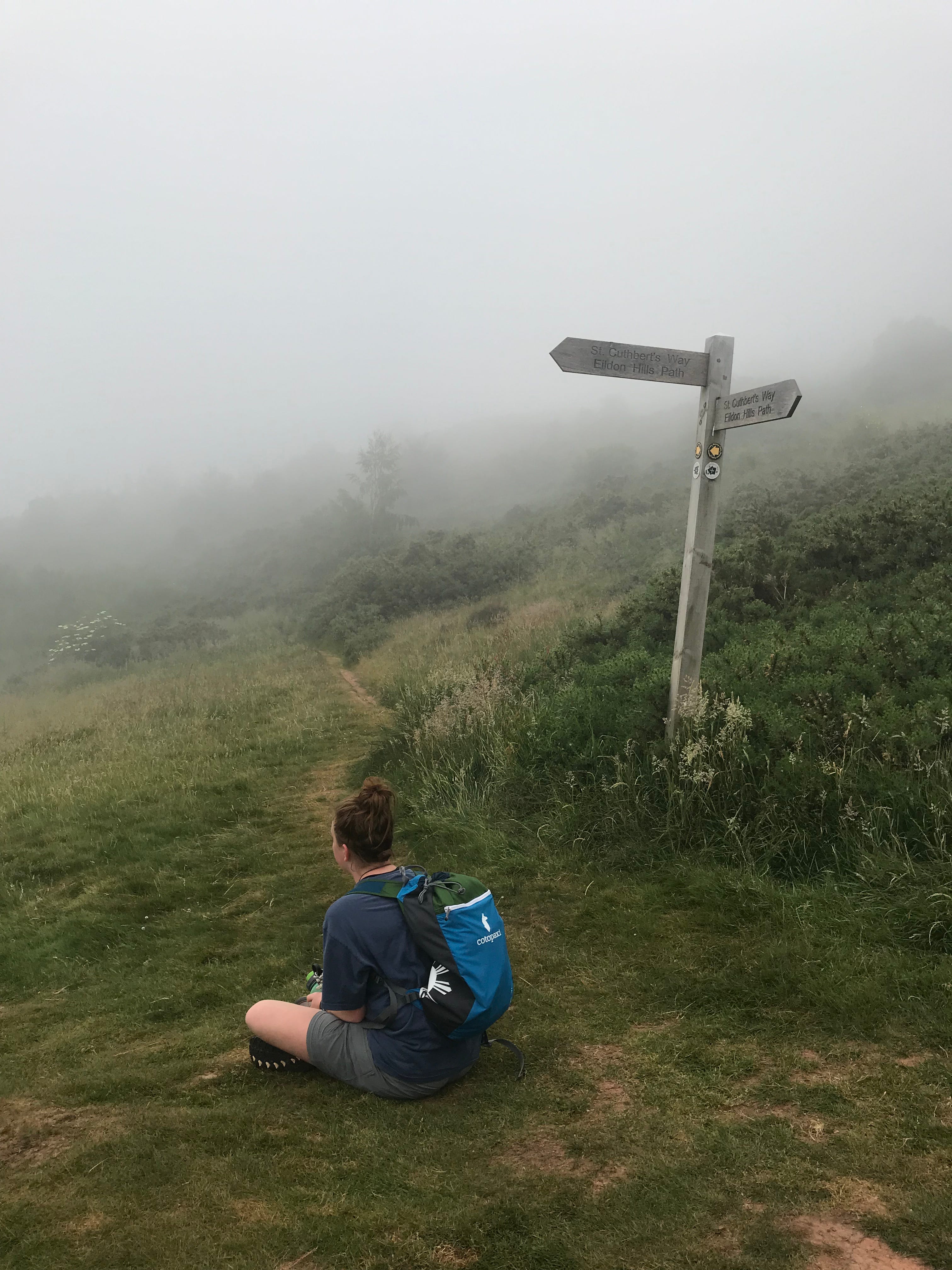
What does it cost to be a disciple?
The word disciple as we often use it in church pertains to folks back then, in history. The people who hung out with Jesus. Who saw, at its emerging this new way of living, this new way of looking at the world and one another. These were the people who heard the message firsthand and knew what it took to change how they were living and who they were following.
They knew it came with risks. To call themselves followers of Jesus wasn’t a path of ease and acceptance. It wasn’t a path towards power and privilege. Being a disciple was an identity that took everything they had and began to transform everything they knew.
And the cost?
Dietrich Bonhoeffer describes it as a cross that is laid on every follower of Christ. “The first Christ-suffering which every man must experience is the call to abandon the attachments of this world.””[1]
The call to abandon the attachments of this world.
That begins the costly nature of discipleship. And the first to take on the job were those 11 disciples in Matthew. We are told that Jesus charges them to go out into the world and to cultivate other people, other disciples, who were willing to take up the cost as well. And the one directive Jesus gave them was this…teach them to obey everything I have commanded.
So if discipleship is costly, the price we have to pay is tied up in this one statement:
Obey what Jesus has commanded.
And what do we know about what Jesus commanded? He commanded us to love God and to love one another. And he showed us how that was supposed to look. It looked like healing the sick and feeding the hungry. It looked like standing up for others who were hurting. It looked like speaking out against injustice and power. It looked like welcoming the stranger.
It also looked like joy and community and family and friends…young and old, rich and poor, sinner and saint.
To be a disciple of Jesus wasn’t about law or regulations or restrictions as we are often quick to define biblical guidance. Instead, to be a disciple was about love.
A love that broke all of the rules.
And what Jesus commanded wasn’t about our accuracy to get it all right. It was about our willingness to keep trying and growing and becoming a disciple willing to pay the cost.
You know…the last time I peached on these texts was 6 years ago. George Floyd had just been murdered. Faith communities were all wrestling with deep and difficult questions about life and death, justice and mercy. The conclusions were divided. Who was wrong…who was right. Who was justified, who wasn’t. Who had the freedom to breathe and who didn’t. We were so caught up in law and regulations and restrictions that as a society we forgot the core of Jesus’ teachings.
And it made me wonder…what would it have meant to be a disciple on the scene that day?
Bonhoeffer describes our ability to respond to these moments as costly grace. The kind of grace that picks up the cross and carries it right into the heart of pain and suffering. The kind of grace that stands against power and uplifts freedom…even when it comes at a price. But he acknowledges that for many of us, cheap grace is more palatable. Cheap grace that allows us to claim ourselves followers of Christ without ever having to put in the consistent hard work of insuring that God’s love isn’t just a concept on paper.
He describes it like this…
Cheap grace is the preaching of forgiveness without requiring repentance, baptism without church discipline…absolution without personal confession. [2]
In other words, Bonhoeffer is saying that we want the good things that come with grace for ourselves, for those closest to us, for those who think like us and look like us. In his words it’s the inexhaustible treasury of the Church that showers us with blessings without asking questions or fixing limits. Because that would be a little too costly.
And if that is our claim to God’s grace are we actually following the teachings that Jesus sent his disciples out to cultivate?
I read a powerful sermon this week from Episcopal priest Allison Burns-LaGreca and I think she summed this dilemma up so well. She said…
“Perhaps part of the ache so many people carry right now is this deep forgetting. We have inherited a story that tells us strength means independence, that vulnerability is weakness, that asking for help somehow diminishes us. And yet the human spirit was never built for isolation. We hunger to be seen, to matter, to belong to something larger than our fears.”[3]
The human spirit was never built for isolation.
To be a disciple means we are going to have to turn the tables on many of our assumptions about who we are as a community. Because to be in community, real community, will mean setting aside many of our divisions. Worrying less about who is right and focusing more on who is loved. Yes it is costly but it is the price we should all be willing to pay.
And…let me leave you this week with these beautiful words from Bob Holmes…
As Wounded Healers & As Warriors of Light, We Become Catalysts of Love
You bringers of heaven
You peacemakers
Christ-bearers
Life givers,
You who bear
Living waters
that quicken the hearts
and enliven the spirits
of weak and weary souls.
You breaker of chains
Givers of hope
You who breathe life
into the faint-hearted.
You who lighten the eyes
and gladden the hearts
of humble and gentlefolk.
You are the catalyst of love
For you are the light of the world
And the salt of the earth
And the glory of God
Who heals us whole.

[1] Bonhoeffer, Dietrich. The Cost of Discipleship. Touchstone, 1995, p. 89.
[2] Bonhoeffer, Dietrich. The Cost of Discipleship. Touchstone, 1995, p. 44.
[3]
